Water damage response across DeKalb CountyWater and sewage cleanup · IICRC S500
Sewage inside occupied rooms

North Decatur Sewage Backup Cleanup

Wastewater emerging through a drain needs controlled cleanup and a source investigation. North Decatur sewage restoration identifies contaminated surfaces, protects clean access and coordinates interior recovery with the plumbing or wastewater service issue behind the backup.

(888) 532-4616Arrange wastewater damage assessment
Restricted contaminated area Porous material evaluation Cleaning before moisture control
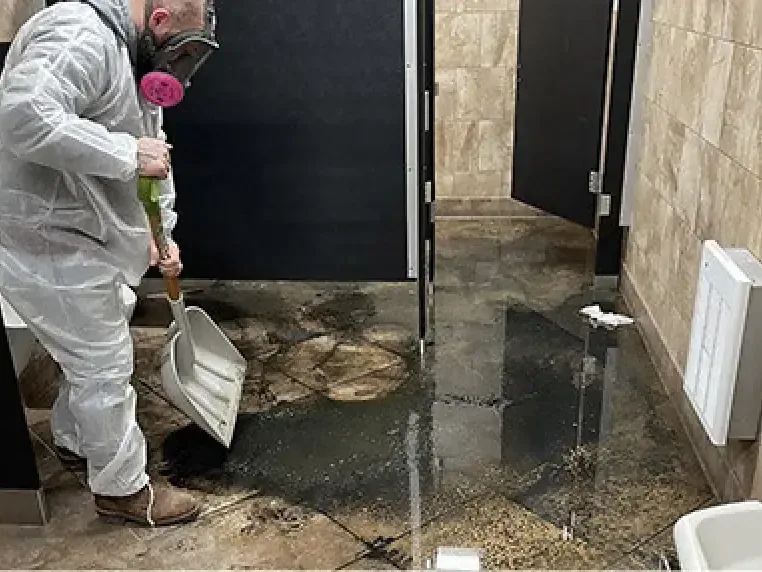
Worker wearing coveralls and a respirator while removing restroom wastewater
Area statusRestricted until assessed
Source questionWhy is wastewater returning?
Material decisionCleanable or absorbent
Work orderRemove, clean, then dry
First steps

Sewage Backup Cleanup: what to do now

  1. 1.Restrict the contaminated work area

    The initial plan keeps people and pets outside the spill and establishes a clean equipment approach. Controlled movement prevents wastewater from being tracked into additional occupied rooms.

  2. 2.Coordinate investigation of the returning wastewater

    The drain and release are documented for the plumbing or wastewater service contact. Recovery accounts for source status and the possibility of further entry into the work area.

  3. 3.Remove unsuitable absorbent materials carefully

    Porous finishes and belongings are assessed for exposure and condition. Materials selected for disposal follow a controlled route, while photographs and removal notes preserve the reason for the decision and the extent of the contacted interior surfaces.

  4. 4.Clean retained surfaces and assess moisture

    After gross waste and unsuitable materials are removed, remaining surfaces receive appropriate cleaning. Moisture measurements then establish the drying work, with records distinguishing sanitation, material treatment and outstanding source repairs before ordinary room use resumes.

Safety before sewage backup cleanup

People and pets should remain outside the affected area. Footwear, tools and wet belongings can transfer contamination into clean rooms, so ordinary household cleanup should not begin by carrying items through the home. The work plan needs a controlled route and suitable handling for recovered wastewater, debris and materials selected for disposal.

Fans should not blow across untreated sewage deposits, and cleaning products should never be mixed in an attempt to remove the odor. Wet electrical equipment and unstable finishes add separate hazards. The assessment establishes safe access and the cleaning sequence before drying equipment is positioned around the retained building materials.

How the work is held to standard

How sewage backup cleanup is handled

Establish the sanitary cleanup boundary

The assessment identifies wastewater contact across flooring, wall bases and belongings. A work boundary and clean approach are defined before recovery begins. The technician also records inaccessible areas and signs of continuing entry so the removal sequence can account for both contamination control and the source investigation that must prevent further wastewater release.

Recover wastewater and remove affected layers

Recovery equipment and disposal handling are selected for the sanitary conditions. Absorbent materials are evaluated beyond their exposed face, including backing and concealed contact surfaces. Where removal is needed, the scope documents the affected layers and protects clean travel routes so contaminated debris does not pass through occupied rooms without suitable control.

Clean the retained building surfaces

With unsuitable material removed, accessible hard surfaces receive cleaning suited to the actual contamination. Edges, penetrations and recesses are examined because they can retain deposits after the center of the room looks clear. The work record identifies cleaned areas and any access limitations that still need resolution before the assembly can be treated as complete.

Measure moisture and prepare the final handoff

Drying addresses the recoverable materials after the sanitation sequence. Progress readings and condition checks support the endpoint, while the owner receives a record of removal, cleaning and remaining finish repairs. Source status remains visible in that handoff so a completed interior cleanup does not conceal a drain problem that still requires separate attention.

Typical cost ranges

What does sewage backup cleanup cost in North Decatur, GA?

Sewage backup cleanup in North Decatur depends on contamination spread, absorbent material removal and access for cleaning. The ranges below cover restoration planning for the affected interior. Drain repair, wastewater service work, replacement belongings and reconstruction should be discussed as distinct parts of the overall loss.

Contained sanitary spill

$2,000 to $3,500
  • Limited contaminated footprint
  • Accessible hard surfaces
  • Controlled local removal

Several contaminated areas

$3,500 to $6,000
  • Connected affected rooms
  • Additional absorbent finishes
  • Broader sanitation work

Extensive Category 3 loss

$6,000 to $9,000
  • Complex contaminated assemblies
  • Expanded disposal needs
  • Extensive cleaning access

Water category, wet area, material depth and the delay before extraction affect the scope. The water damage cost calculator gives a planning range; the assessment sets the work required.

The process

Sewage Backup Cleanup from assessment to dry materials

Sewage restoration addresses water and waste that reached the building interior. The scope combines controlled recovery, removal of unsuitable absorbent materials, cleaning of retained surfaces and subsequent drying, with the cause of the backup investigated through the appropriate separate channel.

  1. Source assessment

    The source repair record identifies the entry point and the correction performed.

  2. Material decisions

    Photos and moisture mapping define the affected assembly before removal or replacement.

  3. Drying verification

    Repeat measurements compare the affected materials with suitable dry references.

  4. Repair handoff

    The final scope separates completed drying from finish work and reconstruction still required.

A sewage backup can affect a room long after the standing wastewater disappears. Absorbent flooring, lower wall sections and stored belongings may retain contamination. North Decatur cleanup therefore starts by defining the contacted surfaces and controlling access, then establishes which materials can remain. Odor reduction or a visually clear floor alone is not the endpoint for the restoration work.

Investigate the returning water and restore the room separately

DeKalb County Department of Watershed Management provides county wastewater services. A suspected service issue can be reported through the appropriate channel while a plumbing professional investigates the property's drain problem. Interior restoration addresses the wastewater already inside. Keeping these responsibilities distinct helps prevent a cleared drain from being mistaken for completion of the contaminated room cleanup.

  • Record the fixture or drain where returning wastewater first became visible.
  • Identify clean rooms that need protection from foot traffic and disposal routes.
  • List porous furnishings and floor layers contacted by the sanitary spill.
  • Preserve photographs before removal changes the affected room's original condition.

Porous materials need a different decision from hard surfaces

North Druid Woods lies northwest of North Druid Hills Road and Lawrenceville Highway. At an affected property, the actual material exposure determines the scope. Carpet backing, padding and absorbent wall components can hold contamination beyond the reachable surface. Removal may be necessary where cleaning cannot address the contacted layers adequately or the material has physically deteriorated.

Retained hard surfaces still need deliberate cleaning at joints, edges and recesses. Wastewater can settle beneath a cabinet or behind base trim, leaving contamination outside the open floor area. Inspection should identify those spaces and explain any access needed. Disposal and cleaning records give the owner a clearer picture of the work than a general statement that the room was sanitized.

Complete cleaning before evaluating the drying endpoint

Valley Brook Estates sits between Lawrenceville Highway and Stone Mountain Freeway, while the Medlock Park neighborhood surrounds the county park. Scheduling references help locate the loss; the restoration sequence depends on its condition. Once gross contamination and unsuitable materials are addressed, remaining moisture in recoverable assemblies can be measured and treated without directing airflow across untreated waste.

Controlled structural drying may follow sanitation, and overflow assessment can clarify damage around an affected fixture. Completion documentation should identify cleaned surfaces, removed porous materials and moisture results. It should also record the status of the source investigation so the owner understands both the room's restoration condition and any unresolved drain or wastewater service concern.
Service area

Sewage backup cleanup coverage in North Decatur

North Druid Woods, Valley Brook Estates and the Medlock Park neighborhood provide references for scheduling. The initial report should identify the affected drain, contaminated rooms and whether wastewater is continuing to enter the occupied space.

The same service nearby: sewage backup cleanup in Clarkston, Scottdale, Avondale Estates.

Water damage restoration in North Decatur · every town covered

Questions

Sewage Backup Cleanup questions in North Decatur

Can a cleared drain mean the cleanup is finished?

Clearing the obstruction addresses the flow problem but leaves wastewater and affected materials inside the building. Restoration must evaluate contamination, remove unsuitable porous layers and clean retained surfaces. Moisture treatment follows those steps where the remaining assembly still holds water.

Should occupants move contaminated furniture outside?

Movement should follow a controlled handling plan. Carrying saturated furniture through clean rooms can spread contamination and damage other surfaces. Photographs and an inventory can preserve useful information while the assessment determines suitable disposal, cleaning or further evaluation of the affected belongings.

Will ordinary carpet cleaning resolve a sewage exposure?

Wastewater can reach carpet backing, padding and the surface below. Cleaning only the visible pile may leave affected layers untreated. Material condition and contamination determine whether removal is required, and the scope should address the complete contacted assembly rather than its upper face alone.

Why are fans delayed during the first cleanup stage?

Air movement over untreated waste can distribute contamination. Gross removal and appropriate cleaning come before the drying arrangement. Once the retained surfaces are ready, equipment can address their moisture without blowing across deposits that still need controlled handling and sanitation.

Which county department provides wastewater services?

DeKalb County Department of Watershed Management provides county wastewater services. A suspected service problem can be reported separately from the interior restoration request. The property's drain diagnosis and the cleanup of affected rooms should each be documented with their own findings and outstanding tasks.

What should the completion record show?

The record should identify removed absorbent materials, cleaned surfaces, moisture treatment and any inaccessible sections. It should also state the source investigation status. That separation helps the owner understand the condition of the interior and the repair work still needed to prevent recurrence.

Water loss support

Plan recovery beyond the visible wastewater

Arrange removal, cleaning and moisture assessment for the contacted surfaces before the room returns to normal occupancy after the backup.

(888) 532-4616Request sanitary restoration planning
(888) 532-4616Water help, 24/7