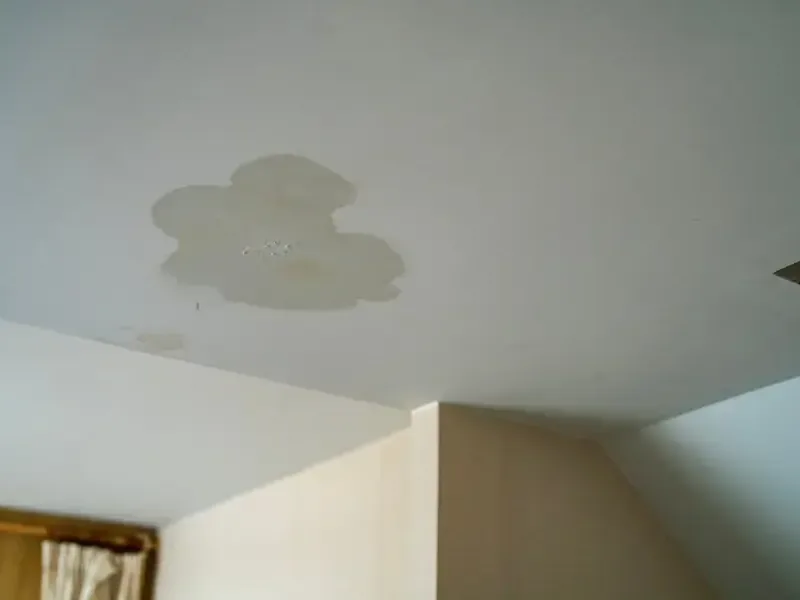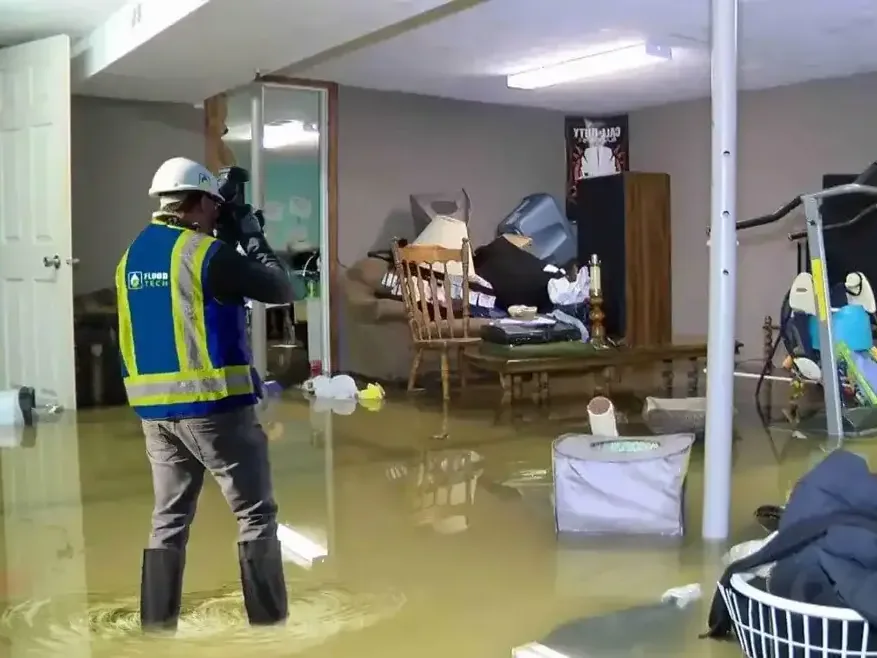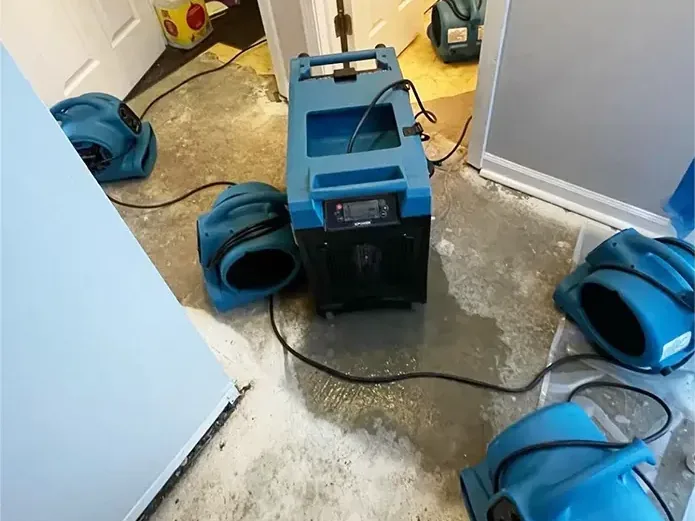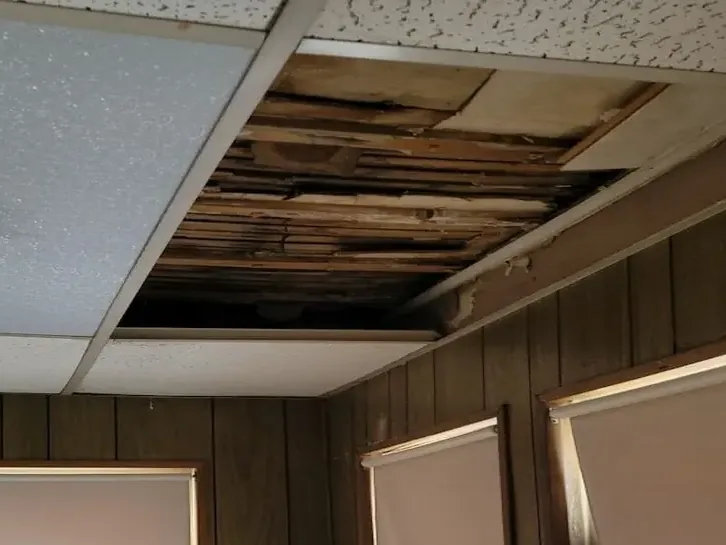
Roof leak water damage in Clarkston requires attention to the path between the roof and the room. Water may run along a rafter, collect in insulation and finally appear through a ceiling seam. The restoration technician checks those connecting layers after the roof source receives attention. A bucket beneath the drip protects only a small part of the affected area.
Inspecting insulation before drying the room
Attic insulation can hold water above a ceiling that looks only lightly stained. The technician checks accessible insulation and wood around the entry path, then records which layers need removal. Trapped wet material can slow the entire dry-out. Equipment placement follows the exposed assembly, with attention to roof framing, ceiling framing and upper wall connections.
- The roofer documents the entry point and the repair or temporary protection.
- The drying technician maps attic moisture separately from the visible room stain.
- Wet electrical components require qualified assessment before nearby work proceeds.
- The owner retains photos from before removal and after source correction.
Rainwater management outside and inside the property
The city stormwater page explains that paved surfaces increase runoff and can contribute to flooding and erosion. Roof entry is a different route from water arriving across the ground. The assessment records whether the first wet area appears overhead, at a doorway or along a floor edge. That distinction keeps the repair and cleanup scope tied to the observed source.
DeKalb County provides water and wastewater services, while the city accepts storm-drain blockage reports. For an affected property near Clarkston High School or the Clarkston Branch, a location description helps arrange access, but the roof and attic inspection determines the actual loss. The roofer checks the entry point while the drying technician maps the resulting indoor moisture.
Keeping the repair sequence clear
Source repair, drying and finish replacement are separate stages. The restoration team compares wet wood with an unaffected reference and logs the trend at repeat locations. Insulation replacement and ceiling closure follow the measured condition, not simply a break in the weather. The property record should also identify any area the technician could not access.
The ceiling cleanup service covers interior overhead damage in more detail. The drying time estimator explains how materials and delay change a planning window. Ready.gov provides water-related safety information, and the city stormwater page describes runoff responsibilities. Keep roof findings with the moisture map so the repair team sees both the source and the resulting indoor damage.