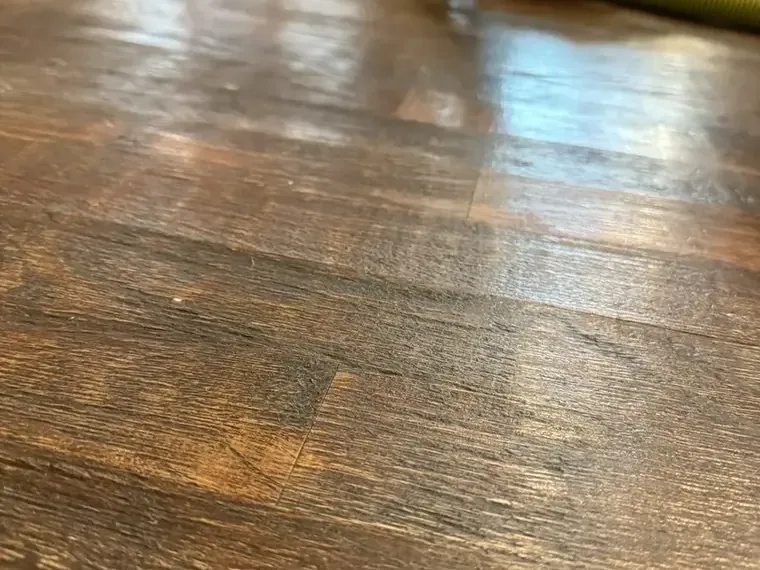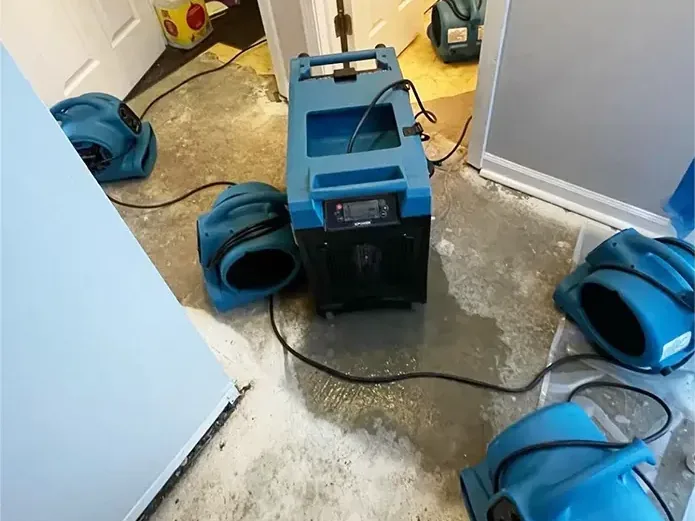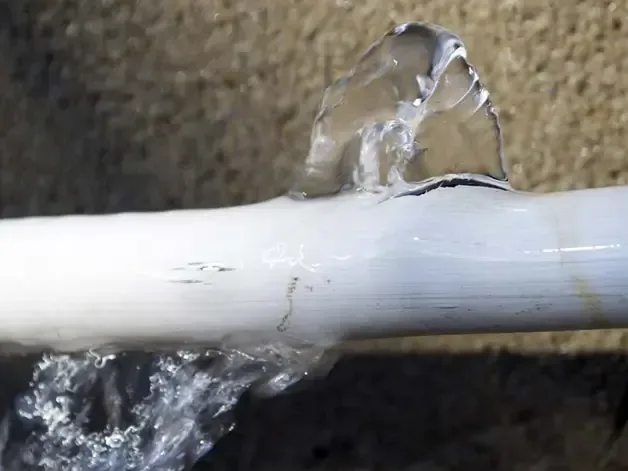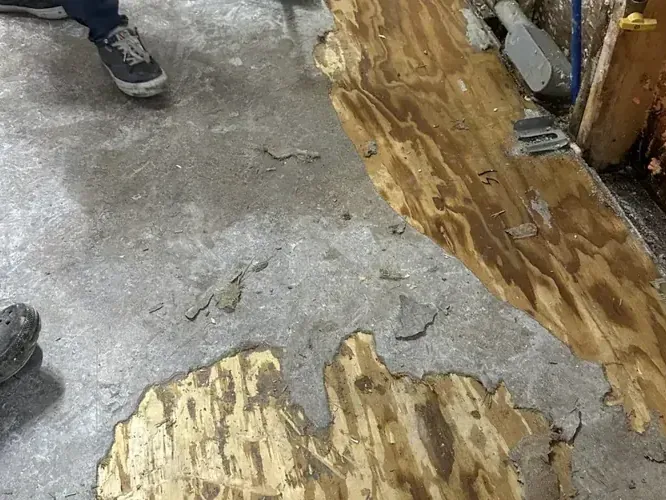
Slab leak water damage in Clarkston can begin as a persistently damp floor, loosened adhesive or water at a wall base. Those signs call for investigation, not an assumption about the exact source. A plumber identifies the pipe problem. The restoration technician then measures how far moisture has moved through the floor assembly and into nearby materials.
Finding the wet boundary under floor finishes
The technician compares affected areas with sound parts of the same assembly. Floor coverings can slow evaporation and conceal a broader moisture footprint than the visible stain suggests. Cabinet toe kicks, baseboards and wall bottoms receive attention because water can collect at those transitions. Concrete and a wood-based finish respond differently, so the crew records each material separately.
- The owner keeps the plumbing diagnosis and repair record with the restoration documents.
- The team identifies the floor covering, adhesive and substrate before choosing access.
- Moisture checks extend into wall bases and neighboring rooms where the floor connects.
- Replacement flooring follows the product requirements and the measured substrate condition.
Local service details without guessing the foundation
DeKalb County Watershed Management operates public water and wastewater services. A private plumbing inspection identifies the source of an indoor floor leak. The restoration scope addresses the resulting moisture inside the building, including any access opening that exposes wet materials. The work plan should identify who handles the pipe, the concrete repair and the finish replacement.
Homes in the Clarkston High School area and properties near the Clarkston Branch library receive an inspection of their actual floor construction. The technician asks about recent plumbing work, the first damp location and whether the wet patch changes after supply isolation. The plumber checks the actual pipe route and the restoration technician records the floor layers at the property.
Drying concrete and neighboring materials at different rates
Air movement alone may dry a surface while moisture remains deeper in the assembly. Dehumidification controls the room environment as water leaves exposed materials. The team selects testing methods appropriate to the substrate and planned finish, then records the trend. A concrete patch, replacement baseboard or adhesive should not conceal a still-wet layer.
The hardwood floor service explains wood movement after water exposure. Structural drying covers the broader room setup. For background, EPA WaterSense addresses leak awareness, while DeKalb County Watershed Management handles public-system information. Keep the source report, moisture map and flooring requirements together so the repair decision follows the complete record.