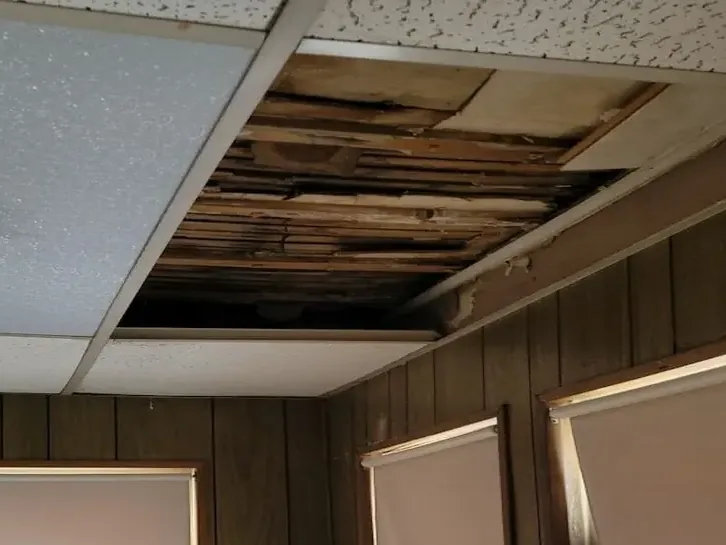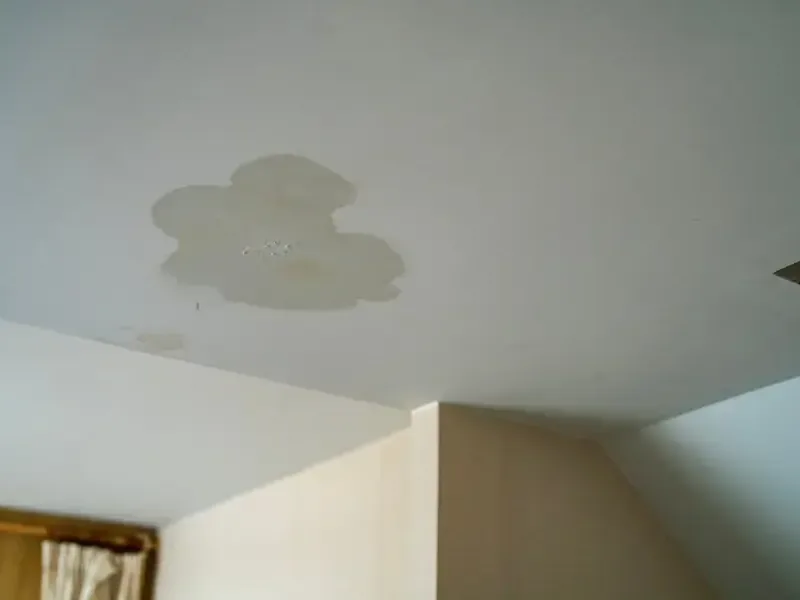
Ceiling discoloration draws attention to the finish, while the important water path may sit above it. Many Avondale Estates houses have Tudor styling, but an overhead leak still requires inspection of the specific room and construction. A home near Lake Avondale may have wet insulation, damaged ceiling material or water following framing into a wall. The inspection determines which layers actually need treatment.
Find where the water traveled above the stain
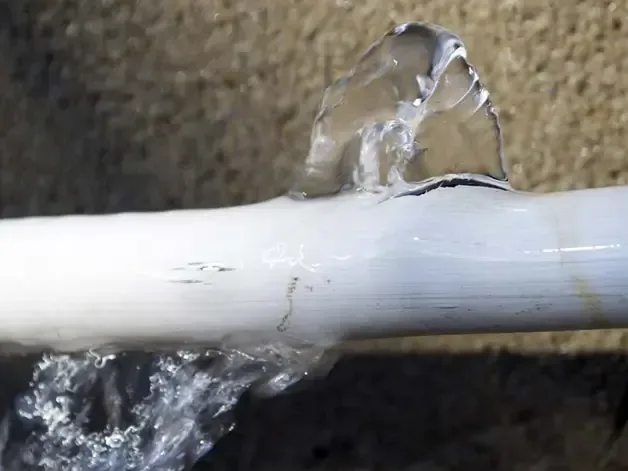
A pipe, roof opening or equipment problem can produce a similar mark below. Source investigation follows the route through the cavity instead of assuming that the stain sits directly under the failure. The first inspection should note active dripping, adjoining wall marks and any floor damage, then compare moisture readings across the affected ceiling and nearby apparently dry areas.
- Look for connected wall staining where water follows framing downward.
- Identify insulation that remains wet above an otherwise drying surface.
- Check contents and flooring below the original drip location for moisture.
- Document any opening needed to reach the concealed material safely.
Controlled access protects the next repair decision
Damaged ceiling finishes may require removal to reach saturated insulation or framing. The opening should serve the drying scope and allow assessment of the wet boundary. Sound adjacent materials can then be evaluated separately. Painting over a stain cannot address moisture trapped above it, and a patch placed too early can close off the access needed for treatment.
Within the historic district, work is included in the city's permit requiring activities. The owner and repair trade should account for that check when planning reinstatement. At a property near Lake Street, records of the affected ceiling and the materials exposed during cleanup help define the repair area without relying on the original stain alone.
Include the room below in the moisture map
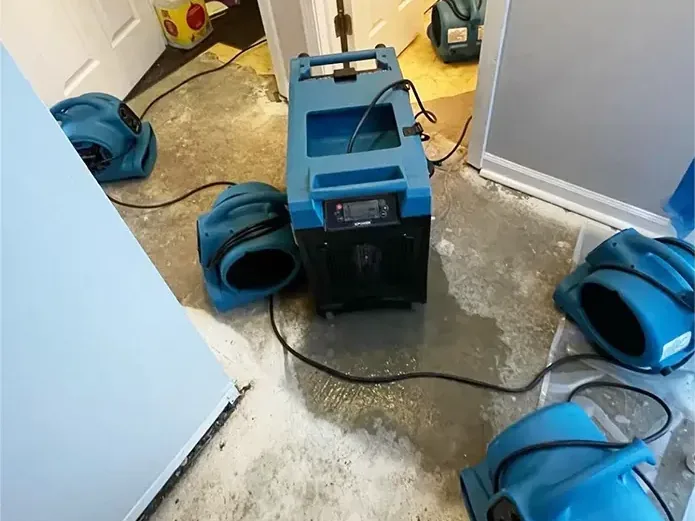
Water from an overhead leak can saturate a rug, enter a floor joint or run behind nearby trim. Those lower surfaces need their own checks even after the ceiling drip stops. The restoration handoff should connect source correction, overhead drying and treatment of the room beneath. Where broader cavities remain wet, structural drying provides the continuing measurement and equipment plan before finishes are restored.