Water damage response across DeKalb CountyWater and sewage cleanup · IICRC S500
Overhead water assessment

Ceiling Leak Water Damage in Scottdale

A ceiling stain can spread sideways before water drips into the room. Scottdale ceiling recovery considers overhead stability, the source above and the hidden layers that need drying before a new finish goes on.

(888) 532-4616Discuss a wet ceiling safely
Overhead stability first Source tracing Upper wall checks
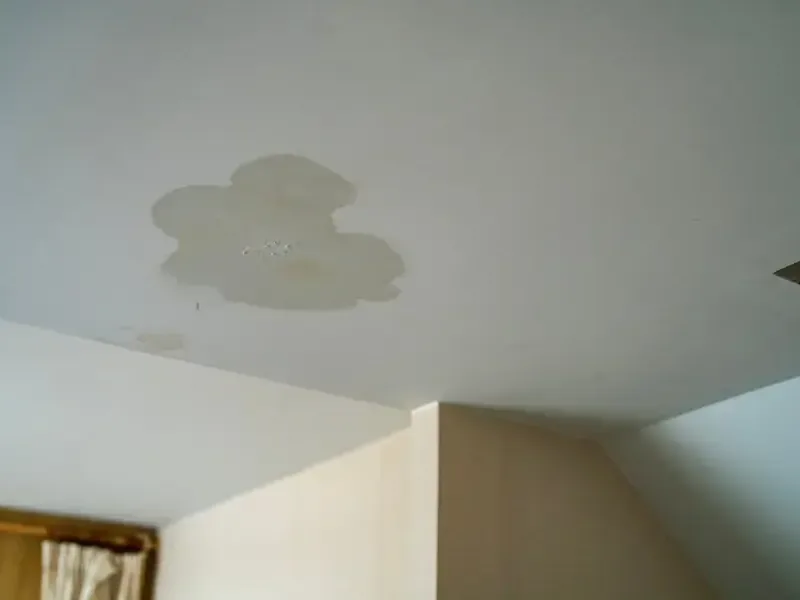
Broad water staining spreading across a pale interior ceiling
First concernOverhead material stability
Source searchTrace from above
Hidden layersBacking and insulation
Lower roomCheck drip damage
First steps

Ceiling Leak Water Damage: what to do now

  1. 1.Keep the space beneath clear

    Occupants should stay away from sagging surfaces and wet electrical fittings. Belongings directly below unstable material should remain untouched until a safe removal route is established, even when ongoing drips threaten the items.

  2. 2.Describe the overhead symptoms

    The initial request should include staining, bulging, falling pieces and any change in the room above. Details about whether dripping follows rain or fixture use can help direct source investigation without replacing inspection.

  3. 3.Coordinate access above the stain

    A property manager or authorized occupant may need to arrange entry to another room or unit. Source repair and ceiling assessment work best when both sides of the affected assembly can be evaluated safely.

  4. 4.Record the lower room effects

    Water landing on furniture, flooring or storage can create additional damage below the ceiling. Safe photographs and a list of affected items help keep those surfaces within the assessment rather than focusing only overhead.

Safety before ceiling leak water damage

A bulging, sagging or shedding ceiling requires separation from people and belongings below. Occupants should not poke a hole, press the surface or stand beneath it to collect drips. Water near a light fitting or other electrical component also needs safe isolation before anyone handles the fixture.

Access to the overhead cavity should be planned after the assembly and hazards are assessed. A bucket on the floor can catch an accessible drip, but it does not make a weakened ceiling stable. The property contact should describe visible movement, falling pieces and affected electrical fittings when arranging the inspection.

How the work is held to standard

How ceiling leak water damage is handled

Assess stability before opening the ceiling

The crew examines visible deformation, electrical concerns and safe access beneath the affected area. Source information from the room or roof above helps direct the investigation. Moisture mapping includes upper wall junctions and the lower room so the proposed work reflects the entire path.

Expose damaged layers under controlled conditions

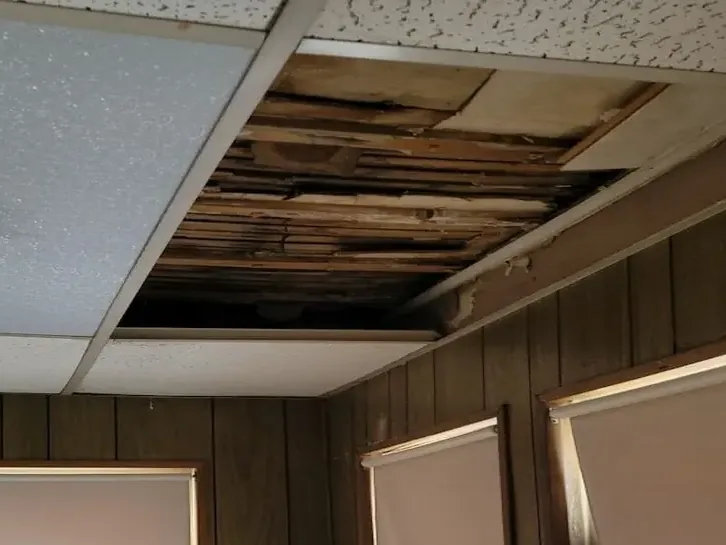
Unstable or unsalvageable finish material is removed with the room protected for debris handling. The exposed cavity reveals insulation and framing conditions that may change the drying plan. Findings are documented, and any source repair still required is coordinated before the opening is closed again.

Direct drying toward retained overhead materials

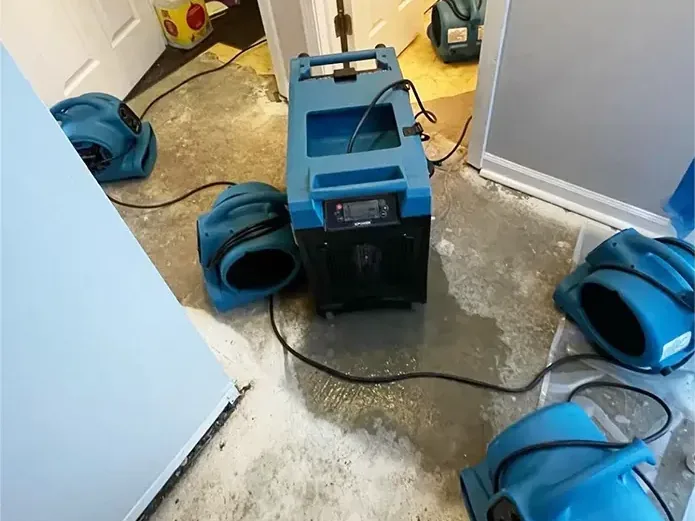
Equipment placement accounts for the elevated surfaces and the room's safe movement routes. Moisture readings are repeated at the ceiling perimeter, framing and connected walls as appropriate. Uneven progress can indicate trapped layers or poor access, prompting an adjustment rather than an early finish repair.

Prepare a clear overhead repair handoff

The final record identifies material removed, source status and drying results for the retained assembly. Lower room effects are included where they formed part of the loss. The owner can then discuss ceiling replacement and decoration with the repair trade using the documented conditions at completion.

Typical cost ranges

What does ceiling leak water damage cost in Scottdale, GA?

Scottdale ceiling leak recovery planning ranges from $900 to $4,500 according to the affected layers and lower room spread. Safe overhead access, insulation exposure and material removal change the scope. Source correction and the final ceiling finish should be shown separately from drying work.

Small accessible ceiling area

$900 to $1,700
  • Localized overhead damage
  • Limited finish access
  • Focused moisture checks

Ceiling and upper walls

$1,700 to $3,000
  • Connected corner exposure
  • Additional cavity drying
  • Selective insulation assessment

Overhead and lower-room loss

$3,000 to $4,500
  • Multiple affected surfaces
  • Lower room recovery
  • Broader repair coordination

Water category, wet area, material depth and the delay before extraction affect the scope. The water damage cost calculator gives a planning range; the assessment sets the work required.

The process

Ceiling Leak Water Damage from assessment to dry materials

Ceiling leak recovery addresses wet finish materials, insulation and connected upper walls after the source is investigated. The work also checks objects and flooring beneath the leak so the recovery boundary includes the lower room.

  1. Source assessment

    The source repair record identifies the entry point and the correction performed.

  2. Material decisions

    Photos and moisture mapping define the affected assembly before removal or replacement.

  3. Drying verification

    Repeat measurements compare the affected materials with suitable dry references.

  4. Repair handoff

    The final scope separates completed drying from finish work and reconstruction still required.

A stain around a ceiling joint may be some distance across the room from the actual leak entry. Water can travel along framing or the back of a finish before finding an opening. Ceiling leak cleanup in Scottdale therefore begins by connecting the visible damage with the space above, while keeping the room beneath unstable material clear of ordinary activity.

Apartment access can determine the investigation route

Oak Forest Apartments opened in 1968, adding an apartment setting to the community's housing history. For any apartment ceiling loss, access to the room above can be important to locating a fixture, supply or drain problem. The assessment identifies the actual building arrangement and coordinates entry before assuming how the ceiling or plumbing is configured.

  • Photographs can show whether the stain boundary has changed over time.
  • Upper wall corners may reveal water traveling beyond the main patch.
  • Wet insulation can remain concealed after dripping into the room stops.
  • The floor below needs inspection where repeated drips have collected around belongings.

Inspect the upper and lower surfaces together

Cedar Park has a playground and picnic area, while Hamilton Recreation Center & Park includes recreation facilities. These familiar places can help describe a property's location during a request. The important inspection details are inside the building: which room is above, where staining begins and whether water has reached adjoining walls.

Softened ceiling material may need controlled removal to expose retained framing and insulation. Other surfaces may remain if they are stable and can dry effectively. The work plan should explain the reason for removal and identify any repair coordination needed above the opening before equipment is arranged below it.

Finish only after the assembly is ready

A stain blocking coat changes appearance but does not remove absorbed moisture. Repeated material checks track the retained assembly as drying progresses. The upper wall junction and cavity edges deserve attention because they can remain damp after the middle of an exposed area responds well to air movement.

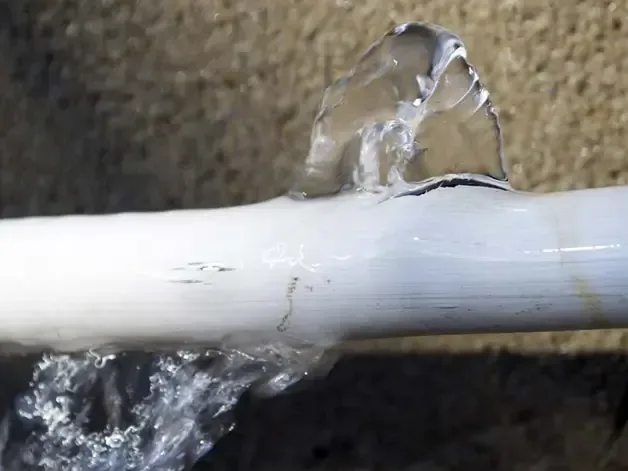
If the entry comes through the building exterior, roof leak recovery can address the interior path alongside the roof repair. If plumbing is responsible, the repair record helps confirm source correction. In either case, the closing notes should separate stable, dried materials from removed finishes and identify the conditions needed before ceiling reconstruction begins.
Service area

Ceiling leak water damage coverage in Scottdale

Ceiling assessments cover residential rooms and commercial interiors with overhead water damage. Apartment requests should include an authorized access contact for the space above, plus any restrictions affecting inspection of the ceiling cavity.

The same service nearby: ceiling leak water damage in Clarkston, North Decatur, Avondale Estates.

Water damage restoration in Scottdale · every town covered

Questions

Ceiling Leak Water Damage questions in Scottdale

Should a homeowner drain a ceiling bubble?

A ceiling bubble can conceal unstable material and electrical hazards. Occupants should keep clear rather than puncturing it. The assessment determines safe access and controlled removal, including whether the space above can be reached to address the water source.

Can the stain be away from the leak?

Yes. Water can travel over the back of ceiling material or along framing before emerging. The inspection follows the path above the visible patch and checks connected surfaces, so a repair does not stop at the most obvious discoloration.

What happens when the upstairs room is occupied?

An authorized contact needs to arrange safe entry and explain the inspection requirements to the occupant. Coordinating that access helps connect the source investigation with ceiling recovery while keeping affected rooms and shared routes under appropriate control during work.

Does all wet insulation need to stay in place?

Retention depends on its type, condition, contamination and ability to dry within the assembly. Saturated or inaccessible insulation may require removal. The crew should explain that decision alongside the condition of surrounding framing and ceiling finishes before reconstruction begins.

Why inspect the floor beneath a small drip?

Repeated drips can wet a floor or item even when the overhead stain looks limited. Moisture may collect under rugs or furniture. Checking those lower surfaces helps define the complete loss and prevents a separate damp area from being overlooked.

When can the repaired ceiling be painted?

Painting follows source correction, suitable material conditions and completion of the required finish repairs. Drying records support the readiness decision. A repaired surface should not be used to hide a still damp cavity or a leak that has not been resolved.

Water loss support

Prepare the whole ceiling assembly for repair

Source correction and measured drying help establish which overhead materials can remain and which finishes need replacement after the leak.

(888) 532-4616Discuss safe ceiling recovery
(888) 532-4616Water help, 24/7