Water damage response across DeKalb CountyWater and sewage cleanup · IICRC S500
Moisture beneath the floor covering

Stonecrest Slab Leak Water Damage

A damp patch that keeps returning over concrete needs more than another surface wipe. Plumbing investigation and floor moisture mapping work together to locate the source and define which layers need restoration.

(888) 532-4616Discuss recurring floor moisture
Source diagnosis separated Floor layers evaluated Repair readiness measured
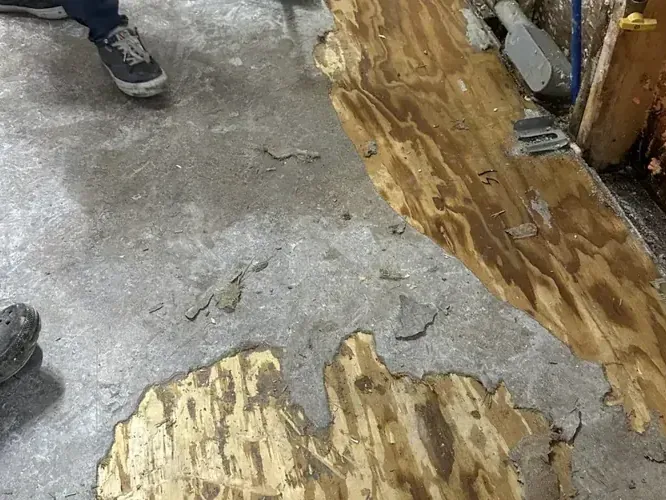
Removed floor covering exposing the concrete substrate underneath
Starting clueRecurring floor dampness
Source workPlumbing investigation
Restoration focusCoverings and substrate
Before installationMaterial suitability checks
First steps

Slab Leak Water Damage: what to do now

  1. 1.Describe the repeated floor change

    Notes about recurring dampness, lifting seams and changing wall bases help focus inspection. Photographs preserve the initial moisture pattern before furniture moves or floor coverings are removed.

  2. 2.Obtain a plumbing diagnosis

    A qualified plumbing assessment should establish the suspected source and repair access. Restoration can use those findings alongside moisture mapping instead of treating a visible floor stain as the exact location of the break.

  3. 3.Protect unstable finish edges

    Loose planks, softened coverings and exposed repair openings can create access hazards. Traffic should use sound dry routes while belongings are moved only where handling will not spread water or damage adjacent surfaces.

  4. 4.Keep the replacement scope separate

    Cleanup, substrate drying, concrete work and new flooring can involve different decisions. An itemized plan helps the owner understand which materials are retained and what conditions the installer needs before replacement begins.

Safety before slab leak water damage

Cutting concrete or lifting attached flooring should follow professional source investigation and an assessment of the assembly. Hidden utilities and uncertain access make exploratory demolition unsuitable as a household first step. The damaged area should remain clear of heavy loads when flooring has loosened, buckled or become a trip hazard.

Water near powered equipment introduces electrical concerns even when the amount on the surface is small. A safe, reachable supply shutoff may help control an active plumbing release. The suspected source, visible changes and any completed plumbing tests should be recorded before restoration decisions enlarge the opened area.

How the work is held to standard

How slab leak water damage is handled

Compare the surface and concealed pattern

The assessment records visible floor changes and takes readings around the affected area, including transitions to adjoining rooms. Plumbing findings help explain the possible source, while the moisture map defines restoration needs. Any limitation caused by inaccessible coverings is documented before the removal scope is finalized.

Expose only the layers requiring access

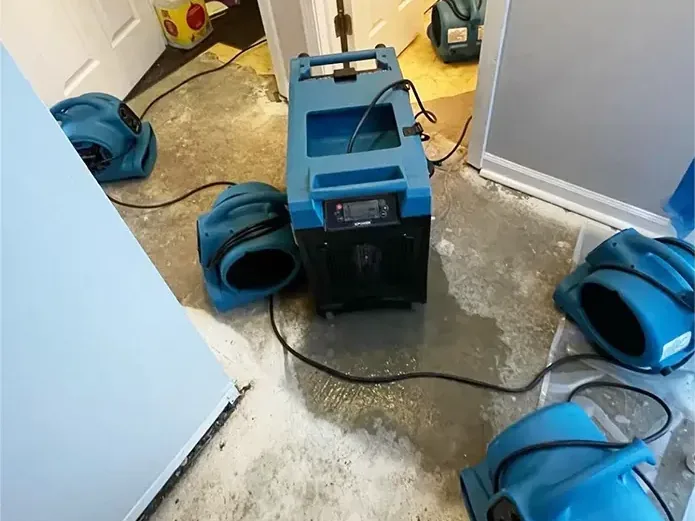
Covering removal is selected from material condition, contamination and the ability to reach wet layers. The plumbing repair opening is protected while debris is handled. Photographs preserve the arrangement of layers and the extent of damage so later repair decisions have a clear record of the original assembly.

Track the uncovered substrate response

Drying proceeds after source correction and removal of unsuitable materials. Monitoring focuses on the exposed substrate, retained layers and nearby wall bases. Readings are compared over time to identify persistent moisture rather than assuming that a surface which looks pale or feels firm has reached a suitable condition.

Coordinate the flooring installation decision

The closing record distinguishes restoration results from the installer's product specific requirements. The installer can determine whether further testing, preparation or moisture treatment is necessary for the selected floor. Remaining concrete repairs and permit related work should be resolved in the reconstruction plan before coverings conceal the substrate again.

Typical cost ranges

What does slab leak water damage cost in Stonecrest, GA?

Slab leak water damage restoration in Stonecrest depends on the floor layers affected, removal access and moisture remaining after plumbing repair. These ranges address restoration of the wet assembly. Leak location, pipe repair, concrete work and replacement flooring should have clearly identified allowances outside that cleanup scope.

Localized floor moisture

$1,500 to $2,600
  • Limited covering access
  • Initial substrate measurements
  • Small drying footprint

Floor and wall bases

$2,600 to $4,300
  • Connected material inspection
  • Trim removal decisions
  • Expanded moisture tracking

Extended floor assembly

$4,300 to $6,500
  • Broader finish removal
  • Layered substrate assessment
  • Installation handoff records

Water category, wet area, material depth and the delay before extraction affect the scope. The water damage cost calculator gives a planning range; the assessment sets the work required.

The process

Slab Leak Water Damage from assessment to dry materials

Slab leak damage cleanup addresses wet coverings, adhesives, trim and connected wall bases after a suspected below floor plumbing release. The restoration scope follows material testing and the repair access selected by the plumbing contractor.

  1. Source assessment

    The source repair record identifies the entry point and the correction performed.

  2. Material decisions

    Photos and moisture mapping define the affected assembly before removal or replacement.

  3. Drying verification

    Repeat measurements compare the affected materials with suitable dry references.

  4. Repair handoff

    The final scope separates completed drying from finish work and reconstruction still required.

Flooring can hide the earliest spread from a pipe beneath concrete. A soft adhesive layer, damp carpet edge or changing board joint may attract attention before any open puddle appears. In Stonecrest, the useful first distinction is between finding the plumbing fault and restoring the materials it has wetted. Those tasks inform each other, but a stained floor alone cannot locate a pipe break.

Distinguish the repair opening from the moisture boundary

The plumber may need a limited access point while moisture has already moved beneath a much larger floor area. Restoration therefore maps the covering, substrate and nearby wall bases independently of the repair hole. Measurements can identify where adhesive has softened, where underlayment holds water and where a neighboring room needs further examination despite an intact surface.

  • A recurring damp edge can indicate moisture retained beneath the visible finish.
  • Loose adhesive requires evaluation before a replacement covering is selected or installed.
  • Trim and partition bases may absorb water from a wet floor assembly.
  • Repair debris and exposed openings need controlled handling during later drying checks.

Assess the assembly present at the property

Properties around Klondike Road and Panola Road should be evaluated by their actual floor construction. Concrete condition, covering type and the location of accessible edges influence the restoration plan. A floor can contain several layers with different responses to moisture, so the decision to retain one material should not automatically apply to everything beneath it.

Everett Park is on Klondike Road and can help describe a service location. Inside the affected property, more useful details include which finish changed first, whether the patch returns and what the plumber has established. DeKalb County's public water responsibility is separate from the homeowner's responsibility for service pipes within the property.

Prepare the substrate for the next floor

Once the source is corrected, removing unsuitable wet coverings exposes the substrate for assessment and drying. A clear surface may still hold moisture that matters to the replacement flooring system. The installer should receive the relevant condition information and determine the testing and product requirements for the selected finish before application begins.

New flooring should not serve as a lid over unresolved moisture. The restoration handoff identifies retained layers, removed finishes and changes in measured conditions, along with the plumbing repair information available. Where demolition or interior reconstruction requires coordination with the Building Department, that planning belongs before closure. A defined handoff keeps emergency water work distinct from concrete repair, surface preparation and the final flooring installation.
Service area

Slab leak water damage coverage in Stonecrest

Around Klondike Road, Panola Road and Everett Park, a request can describe recurring dampness, affected floor finishes and plumbing findings. The inspection follows the property's actual construction and the visible pattern of moisture.

The same service nearby: slab leak water damage in Clarkston, Avondale Estates, Scottdale.

Water damage restoration in Stonecrest · every town covered

Questions

Slab Leak Water Damage questions in Stonecrest

Does damp flooring identify a slab pipe break?

It identifies a moisture problem requiring investigation. Plumbing tests establish whether a pipe beneath the floor is involved, while restoration measurements identify affected materials. The cleanup scope should follow both findings instead of relying solely on the appearance of a stain.

Will the entire floor need to come up?

The answer depends on the covering, water spread and access to wet layers. Some damage can be localized, while connected underlayment may extend farther. Removal decisions should explain the condition of each layer and the practical ability to dry what remains.

Is concrete dry when no puddle remains?

Concrete can retain moisture after surface water disappears. The condition required for new flooring depends on the selected product and installation system. Appropriate testing and the installer's requirements should inform that decision before adhesive or replacement coverings are applied.

Can water affect nearby partition walls too?

Yes. Moisture at the floor can reach trim and partition bases, especially where absorbent materials contact the substrate. Those areas belong in the inspection. A floor focused repair may miss wet material at the perimeter unless it is checked separately.

Who pays attention to the source repair?

The plumbing contractor addresses the failed pipe and repair access. Restoration addresses the affected building materials. Keeping the source repair record with the drying documentation helps show how both parts were handled before the floor is prepared for replacement.

What can help the initial assessment?

Useful information includes the first changed floor area, recurring dampness, covering type and any completed plumbing tests. Safe photographs of edges and adjoining trim can supplement those details. The inspector should also know about recent removals or an open repair location.

Water loss support

Resolve the layers beneath the visible damage

A focused inspection can connect plumbing findings with substrate conditions and set out a practical handoff for flooring repairs.

(888) 532-4616Discuss substrate cleanup and drying
(888) 532-4616Water help, 24/7