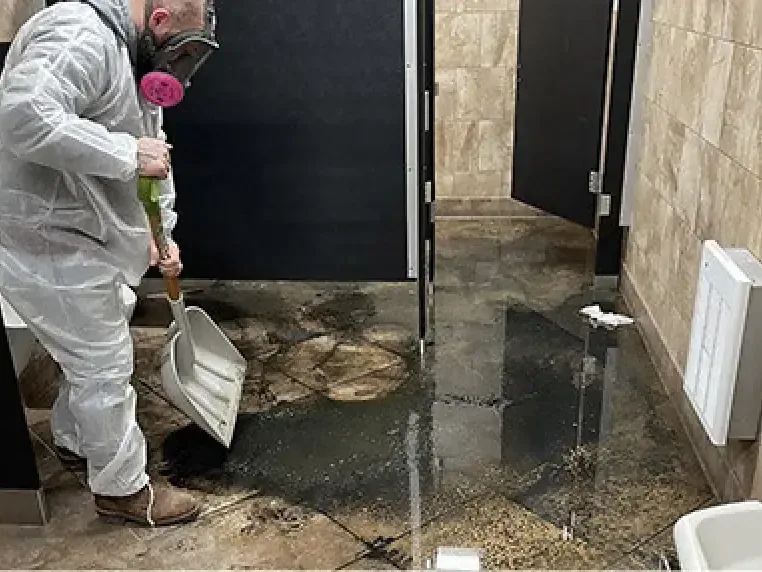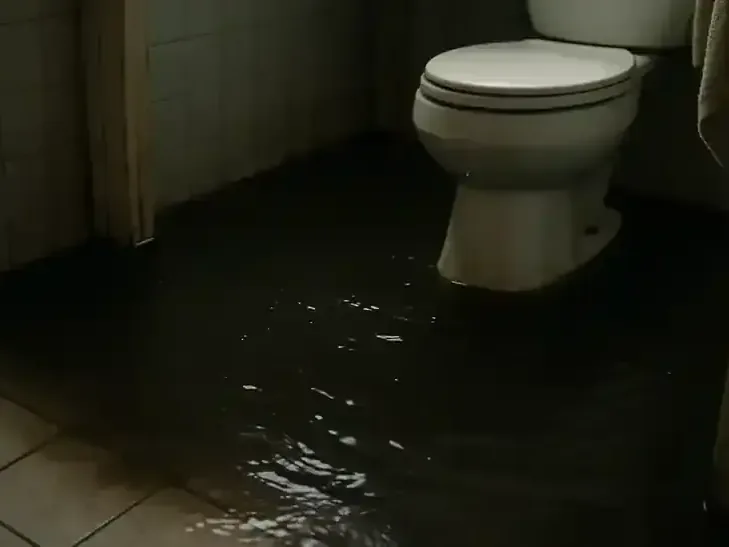
An overflow is not finished simply because the bowl level drops. Water may have entered the gap beneath a vanity, touched stored toiletries or reached a carpeted doorway. Stonecrest bathroom cleanup traces that contact area and distinguishes water from the fixture supply from material released through the bowl. The resulting assessment determines the cleaning, removal and drying work needed after the plumbing issue is controlled.
Distinguish the fixture from the wider drainage issue
An isolated toilet blockage and simultaneous trouble at several drains call for different plumbing investigation. DeKalb County Watershed Management receives sanitary sewer spill reports, while homeowners maintain service pipes on their property. The property plumbing assessment should identify the source location so an indoor fixture problem is not confused with a broader public infrastructure concern.
- Vanity bases can conceal water that no longer appears on open tile.
- Bathroom rugs and porous storage items need separate contamination decisions.
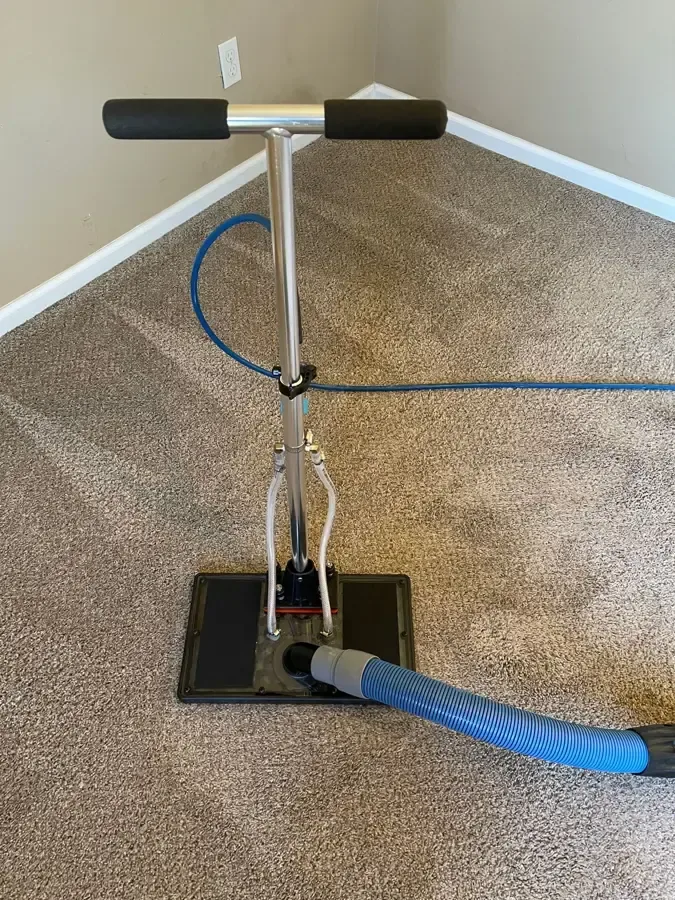
- A doorway can carry water into padding beneath an adjoining floor covering.
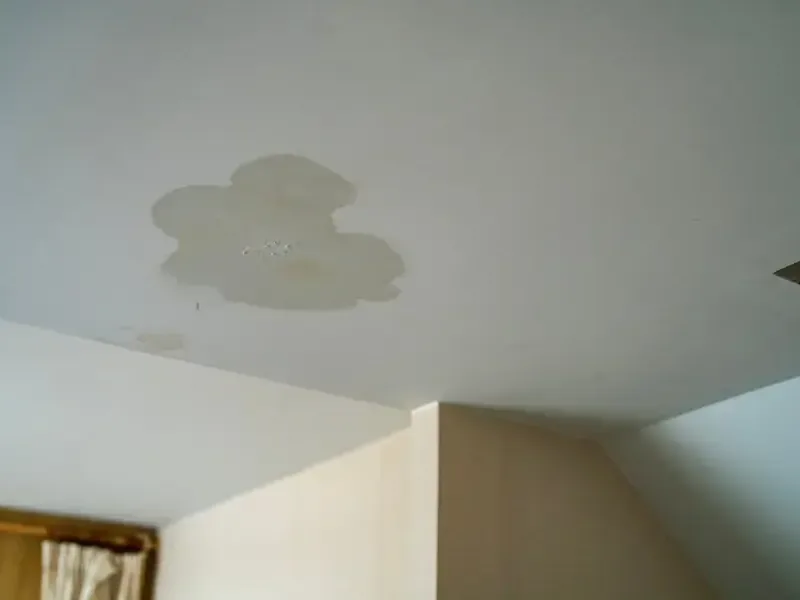
- A wet ceiling below suggests inspection beyond the bathroom surface alone.
Inspect where the bathroom stops being easy to clean
Fairington Park is on Fairington Parkway, and Hillvale Road is another local route for describing a property. Inside, floor finish and the location of cabinets affect the cleanup. A washable exposed surface may be accessible for cleaning while a swollen cabinet panel or soaked pad beneath a doorway requires a different decision.
The technician should map the full water contact area before restoring normal traffic. Toilet bases, trim gaps and penetrations into the room below can hide secondary spread. Where the plumbing trade needs to remove the fixture, restoration can coordinate inspection of the newly exposed floor so damaged or contaminated material is addressed before the fixture returns.
Clean before rebuilding normal bathroom use
Controlled removal collects water and unsuitable porous material while limiting tracking into clean areas. Appropriate cleaning of retained accessible surfaces precedes drying equipment. The plan should identify how contents will be handled, which finishes remain and whether an adjoining room or lower ceiling also needs inspection and moisture monitoring.
A sanitary spill report does not complete the indoor restoration. The closing record should describe the plumbing findings available, contamination handling and the condition of retained surfaces. Bathroom reconstruction follows that information, with any applicable trade or interior finish approvals coordinated before concealed areas are closed. The room can then be returned to use through a defined sequence rather than relying on a clean looking tile surface alone.