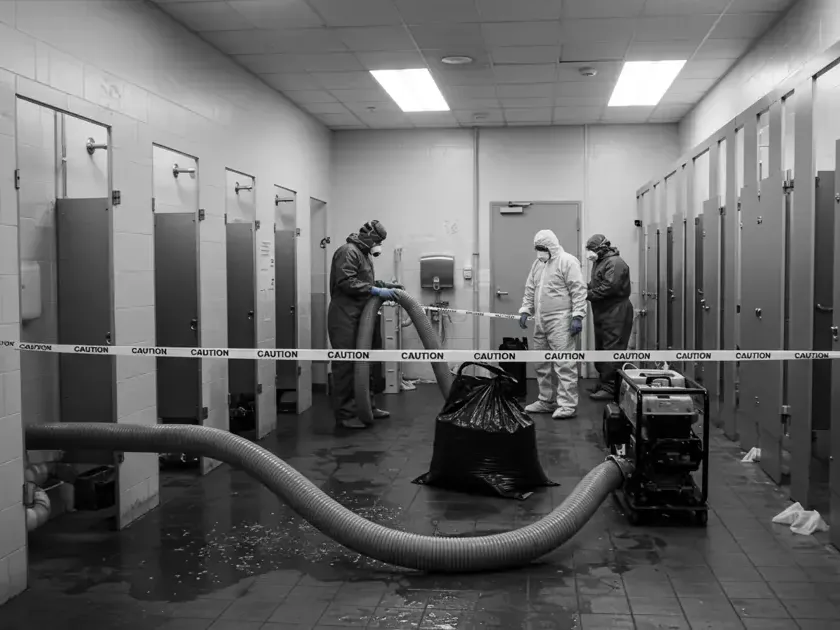
Scottdale's commercial district centers on East Ponce de Leon Avenue, where antique shops, auto body shops, and industrial buildings form part of the local setting. Water inside a business can affect stock, floor access, and the next day's work at the same time. A practical response assigns separate places for wet items, dry goods, and restoration equipment so the owner can follow the loss without turning unaffected space into another work area.
Key takeaways
- Protect a safe entrance before moving goods or starting cleanup.
- Inventory stock by its original location and water contact.
- Keep dry inventory separate from items awaiting assessment.
- Agree on equipment routes and essential access with the restoration team.
- Document reopening decisions by the condition of each work area.
Map the operating areas before shifting stock
A shop's floor plan affects how cleanup can proceed. The owner can identify the customer area, storage space, staff route, and fixed equipment on a simple sketch.
The first walkthrough then follows the water across those functional areas and records which spaces remain usable without crossing wet or unsafe flooring.
Photographs should show shelves and storage positions before goods are relocated. A box that stood on the floor may have a different contact history from stock above it.
Preserving that arrangement helps the inventory remain accurate after items are moved to make access for extraction and drying equipment.
The commercial water damage assessment can use the operating sketch to coordinate work around the actual business. The scope should identify the affected surfaces and the route needed to reach them.
This gives the owner a practical basis for scheduling staff movement and deliveries during restoration.
- Identify entrances that avoid the affected floor.
- Mark storage and fixed equipment on the room sketch.
- Photograph stock before relocation.
- Describe tasks that require access to a particular area.
Sort goods by exposure and material
The contents record should distinguish items touched by water from goods moved only for access. Each entry can include the original location, material, visible condition, and proposed next action.
That structure is especially useful when a room contains varied objects that cannot all be handled or cleaned in the same way.
The corridor includes antique shops, so some businesses may need individual assessment of finishes, coverings, and composite items. A valuable or delicate object should receive appropriate specialist consideration before cleaning is attempted.
The owner can preserve identifying photographs and existing condition notes to help that assessment remain tied to the particular item.
Packaging can hide contact on the underside or allow water into stored goods. A dry top surface should not end the inspection when the bottom sat in a wet area.
The inventory team should document the full contact pattern and keep items awaiting a decision apart from goods already cleared for clean storage.
Create a removal route that protects dry storage
Wet material needs a planned route out of the building. Carrying it through clean stock can create additional handling and cleaning work.
The restoration team and owner can identify a suitable entrance, a staging area, and the points where work activity must remain separated from business operations.
Where the water condition requires restricted handling, employees should leave affected items in place until the team has assessed them. Electrical equipment and cords exposed to water need appropriate professional attention.
Staff should avoid restarting machinery or moving powered equipment through wet areas as part of an improvised cleanup effort.
The water removal work should follow the agreed access route while preserving the inventory labels. Floor areas beneath moved stock can then be inspected and recorded.
The owner gets a clearer picture of the affected footprint as storage is opened up, with changes added to the same room diagram.
- Keep dirty or wet staging separate from dry goods.
- Leave exposed electrical equipment out of use pending assessment.
- Preserve item labels during relocation.
- Update the floor map as hidden areas become accessible.
Match source coordination to the finding
Scottdale is an unincorporated community in DeKalb County. The county's Department of Watershed Management provides water and wastewater services and publishes an online form for water or sewer repair, maintenance, and construction requests.
A public service concern can be recorded separately from the cleanup needed within the business.
An interior equipment or plumbing failure needs the relevant repair professional to identify and correct the source. The business record should state the finding, the repair performed, and any remaining access requirement.
This helps the restoration team understand whether the source has been controlled before stock or equipment returns to the affected area.
When several parties need entry, a simple access schedule can prevent the drying route from being blocked by a repair visit or delivery. The owner should name the responsible contact for each task.
Consistent scheduling also protects item locations and monitoring points from changing without a record of the move.
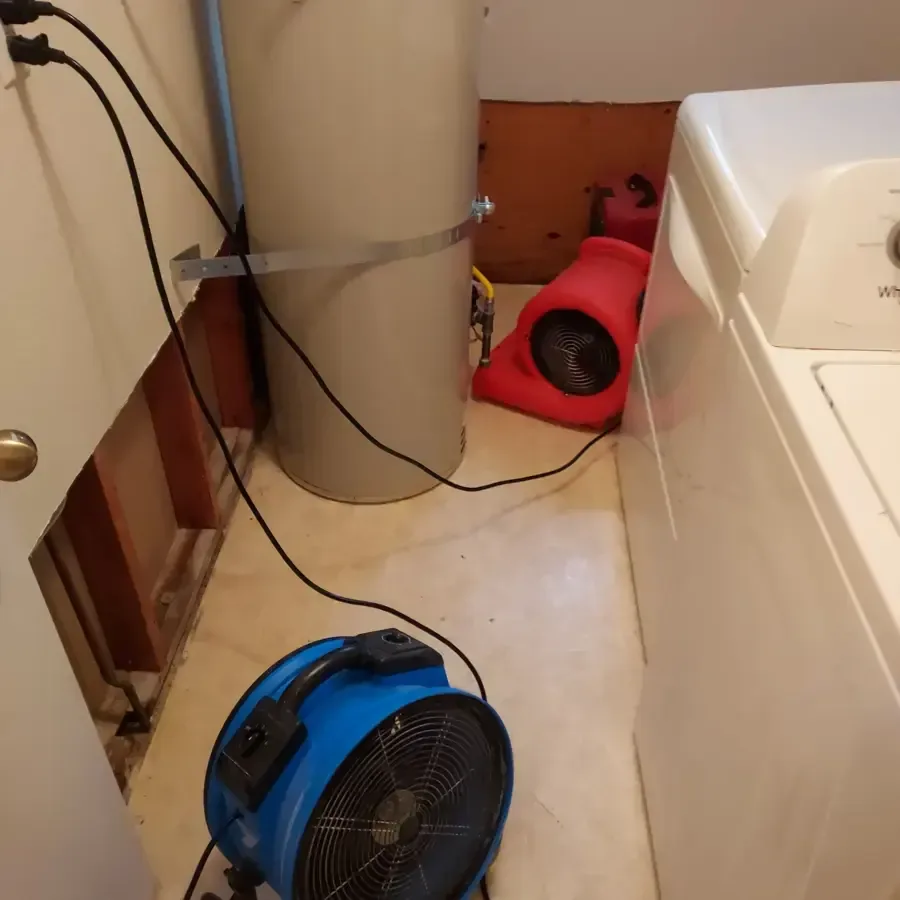
Dry the building around its retained contents
Once the area is prepared, the drying arrangement should serve the wet building materials and the recoverable contents included in the scope. Fixed shelving, counters, and equipment can restrict airflow or hide damp surfaces.
The technician needs to identify those constraints and explain what access is required to treat the retained materials.
The structural drying plan should name the surfaces selected for monitoring. Repeated readings can then show which sections are progressing and which need further access.
A business owner benefits from that location specific account because it connects equipment use with the actual area still unavailable for normal operations.
Stock should return to an affected corner only after the relevant treatment and inspection are complete. Early restacking can conceal an unfinished area and disrupt monitoring.
The project team can identify suitable interim storage so operations stay organized while the room's material condition continues to be checked.
- Leave monitored corners available for repeat checks.
- Record constraints created by fixed shelving or counters.
- Keep equipment routes clear during working hours.
- Agree on when stock can return to each treated area.
Reopen by area with a usable contents record
The final handoff should distinguish building readiness from individual stock decisions. A floor area may be ready for use while an item awaits specialist assessment or replacement.
Separate entries keep the reopening discussion concrete and prevent an unresolved contents question from being lost in a general statement that the building is dry.
The owner can retain a location based inventory showing cleaned goods, removed material, and items still awaiting a decision. Paired photographs of the original storage arrangement and the treated area help explain the change.
The record should also identify any finish repair that must occur before shelves or heavy equipment are reset.
A closing access plan can state which entrances and work areas are ready for normal use and which remain part of the repair project. Staff can then receive a consistent description of the remaining restrictions.
That practical handoff supports an orderly return without requiring employees to interpret technical measurements or guess where unfinished work remains.
Questions
Should every item in a wet room be listed as damaged?
The inventory should record each item's actual contact and condition. Dry goods moved to create access can be identified separately from stock that requires cleaning, assessment, or disposal.
How can the owner preserve information before stock moves?
Wide photographs show shelf positions and storage groupings, while close views identify individual items. Labels tied to the original room or shelf keep that information useful during relocation.
Can staff operate equipment that stood in water?
Affected electrical equipment needs appropriate professional assessment before use. The access plan should identify such equipment so employees do not restart it during cleanup.
What makes the final inventory useful for reopening?
A clear status for each item and area separates completed treatment from outstanding decisions. The owner can see which goods may return and which locations still need repair access.